Stackable Plastic Storage Containers — Rigid PP Boxes for Vertical Warehouse Storage
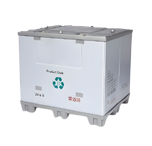
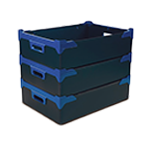
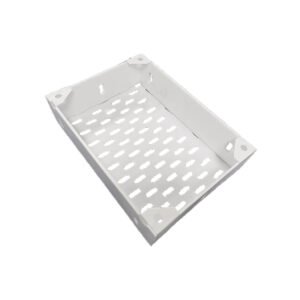
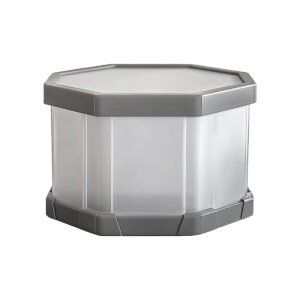
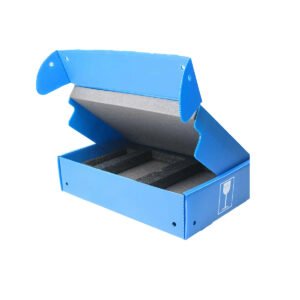
PPBOXY stackable plastic storage containers are rigid, open-cavity polypropylene boxes designed for maximum vertical storage efficiency in warehouses, factories, and distribution centers. Unlike foldable boxes that collapse for return logistics, these containers maintain a permanent rigid structure optimized for stable multi-tier stacking — 6 to 10 loaded boxes high without buckling, shifting, or risking cargo damage.
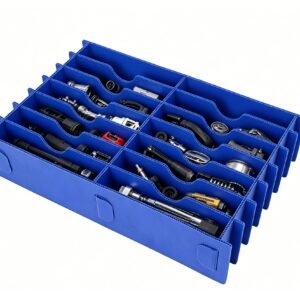
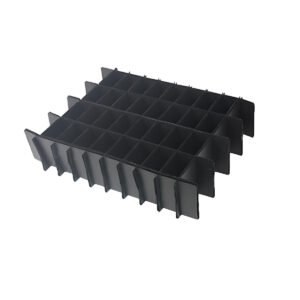
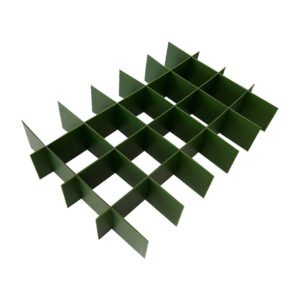
The open-cavity design provides a single unobstructed storage space for bulk items, and optional partition inserts, lid covers, and replacement handles allow customization without committing to a built-in divider layout.
Where stackable containers fit in the PP box lineup:
| Box Type |
Structure |
Best For |
Learn More |
| Stackable Containers (this page) |
Rigid, open-cavity, 6–10 layer stacking |
General warehouse storage, bulk parts, multi-tier organization |
— |
| Foldable Packaging Box |
Foldable, flat-pack return |
E-commerce, retail, space-saving return logistics |
Foldable Packaging Box |
| Turnover Box |
Rigid, cold-chain rated |
Refrigerated transport, food processing washdown |
PP Corrugated Turnover Box |
| Storage Containers with Dividers |
Rigid, built-in cell dividers |
Small parts organization, electronics, kits |
Storage Containers with Dividers |
| Foldable Pallet Box |
Foldable, honeycomb base, 500kg |
Heavy-duty bulk storage, pallet-level shipping |
Foldable Pallet Boxes |
If you need a box that stacks higher, stays rigid, and stores bulk items without compartmentalization, this is your product. For foldable return logistics, see our Foldable Packaging Box. For cold-chain environments, see our Turnover Box.
Specifications
| Parameter |
Detail |
| Material |
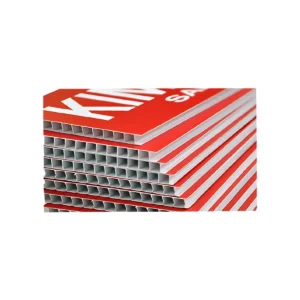
Polypropylene (PP) corrugated sheet (twin-wall) |
| Standard Wall Thickness |
4 mm (options: 3 mm, 5 mm) |
| Standard Sizes |
Small: 400×300×200 mm / Medium: 600×400×280 mm / Large: 800×600×400 mm / Custom |
| Custom Sizes |
Available — die-cut to any dimension |
| Color |
Blue, Black, White, Gray, Custom (Pantone) |
| Static Stack Height |
6–8 layers (standard) / 8–10 layers (reinforced) |
| Nesting Space Saving |
60%+ vertical space reduction when empty-nested |
| Static Load Capacity |
30–150 kg (varies by size and wall thickness) |
| Dynamic Load Capacity |
20–80 kg (during transport) |
| Operating Temperature |
-20°C to +80°C |
| Water Resistance |
Fully waterproof — zero moisture absorption |
| Chemical Resistance |
Acids, alkalis, oils, solvents, cleaning agents |
| Food Contact |
FDA 21 CFR 177.1520 / EU EC 1935/2004 compliant |
| Anti-Static Option |
Available (10⁹–10¹¹ Ω/sq) |
| Reusability |
200–500+ cycles |
| Recyclability |
100% recyclable (PP #5) |
| Printing |
Screen printing / Corona-treated UV digital |
| Available Accessories |
Lid covers, partition inserts, replacement handles, drainage holes |
| MOQ |
None |
| OEM/ODM |
Supported |
Why Rigid Stackable Containers for Warehouse Storage?
Stack Higher Than Foldable Alternatives
Foldable boxes trade stacking stability for return-logistics convenience. Their foldable joints and Velcro closures create structural weak points that limit loaded stacking to 5–7 layers. Rigid stackable containers have no folding mechanisms — every wall is a continuous rigid panel — enabling 6–10 loaded layers in standard configurations, and up to 10 layers with reinforced corner construction.
For warehouses where vertical cube utilization is the primary cost driver, this 30–50% stacking height advantage translates directly to floor space savings. A facility stacking 8 layers of rigid containers instead of 5 layers of foldable alternatives stores 60% more product per square meter of floor space.
Open-Cavity Flexibility — One Box, Many Products
Built-in divider containers lock you into a fixed compartment layout. If your product mix changes, the dividers become a constraint rather than a benefit. Stackable containers with their single open cavity adapt to any product — from large automotive components to bulk fasteners to packaged goods — without reconfiguration.
When separation is needed, optional partition inserts slot in and can be removed or swapped in seconds. This open-cavity-with-optional-inserts approach gives you the flexibility of a universal container with the organization of a divided one — without paying for permanent dividers you may not always need.
Nesting Efficiency for Empty Return
When not in use, empty containers nest inside each other with 60%+ vertical space reduction. This nesting capability makes rigid stackable containers practical for closed-loop logistics where containers return empty — a common scenario in factory-to-warehouse and warehouse-to-production-line shuttle systems.
While nesting doesn’t match the 80%+ space saving of foldable boxes, rigid containers offer superior stacking performance when loaded — the scenario that matters most during active storage and distribution operations.
Stackable Containers vs Foldable Box vs Turnover Box vs Divider Container
| Criteria |
Stackable Containers (this page) |
Foldable Packaging Box |
Turnover Box |
Divider Container |
| Structure |
Rigid, fixed |
Foldable, flat-pack |
Rigid, fixed |
Rigid, fixed |
| Max stack height (loaded) |
6–10 layers |
5–7 layers |
6–8 layers |
6–8 layers |
| Internal space |
Open cavity |
Open cavity |
Open cavity |
Built-in cell dividers |
| Optional inserts |
Partitions, lids, handles |
Optional inserts |
Optional inserts |
Fixed divider layout |
| Empty return space saving |
60%+ (nesting) |
80%+ (flat-fold) |
60%+ (nesting) |
60%+ (nesting) |
| Cold-chain rated |
-20°C to +80°C |
-20°C to +60°C |
✅ -20°C optimized |
-20°C to +80°C |
| Best for |
General warehouse, bulk parts |
E-commerce, retail, return logistics |
Cold storage, food processing |
Small parts, electronics, kits |
| Reuse cycles |
200–500+ |
20–30 |
500+ |
200–500+ |
| Food-safe |
✅ FDA/EU |
✅ FDA/EU |
✅ FDA/EU (primary) |
✅ FDA/EU |
Decision guide:
- Need maximum loaded stacking height? → Stackable Containers (this page)
- Need flat-pack return logistics? → Foldable Packaging Box
- Need cold-chain and washdown? → Turnover Box
- Need built-in compartments for small parts? → Storage Containers with Dividers
Applications — Where Stackable Containers Excel
Manufacturing & Assembly Lines
In manufacturing facilities, stackable containers shuttle work-in-progress components between production stations. The rigid structure protects contents during forklift transport, and the open-cavity design accommodates parts of varying sizes without custom inserts. When production lines change, the same containers adapt without modification.
Warehouse & Distribution Centers
The primary use case: maximizing vertical storage density. Stackable containers allow 6–10 loaded layers in standard pallet racking, significantly increasing warehouse throughput per square meter. The interlocking base-and-lid design prevents lateral shifting during forklift handling — a critical safety requirement in high-traffic distribution centers.
Automotive Parts & Hardware
Automotive components range from small fasteners to medium-sized assemblies. Stackable containers handle this variety without requiring different box types — optional partition inserts organize small parts when needed, and the open cavity accommodates larger components when inserts are removed. Chemical-resistant PP withstands incidental contact with oils, coolants, and degreasers common in automotive environments.
Food Processing & Catering
Food-grade PP (FDA 21 CFR 177.1520 / EU EC 1935/2004 compliant) makes these containers suitable for ingredient transport, work-in-progress storage, and finished product staging in food processing facilities. The waterproof surface withstands washdown protocols, and the non-porous material prevents bacterial contamination. For dedicated cold-chain operations, see our Turnover Box which is optimized for refrigerated environments.
Retail Back-Room Storage
Stackable containers organize back-room inventory in retail stores — from electronics accessories to household goods. The optional lid covers protect contents from dust, and custom printing on container surfaces enables visual inventory identification without opening each box.
Stackable Container vs Cardboard vs Injection-Molded Plastic vs Metal
| Factor |
PP Stackable Container |
Cardboard Box |
Injection-Molded Plastic |
Metal Container |
| Water resistance |
100% waterproof |
Absorbs → fails |
Waterproof |
Rust/corrosion risk |
| Reuse cycles |
200–500+ |
1–3 |
500–2000+ |
2000+ |
| Weight (empty, 600×400) |
1.5–3.0 kg |
0.8–1.5 kg |
3.0–6.0 kg |
8–15 kg |
| Stack height (loaded) |
6–10 layers |
3–5 layers |
8–12 layers |
10+ layers |
| Nesting (empty) |
✅ 60%+ space saving |
❌ |
⚠️ Limited |
❌ |
| Custom printing |
✅ Screen + digital |
✅ Direct print |
⚠️ In-mold label |
❌ (paint/etch) |
| Food-safe |
✅ FDA/EU |
⚠️ Glue migration |
✅ |
⚠️ Coating required |
| ISPM-15 exempt |
✅ |
✅ |
✅ |
✅ |
| Impact on contents |
Cushioned (corrugated) |
Minimal |
Rigid (hard transfer) |
| Cost per cycle (100 trips) |
$0.02–0.15 |
$1.00–2.50 |
$0.05–0.30 |
$0.10–0.50 |
| Break-even vs cardboard |
8–15 trips |
— |
15–25 trips |
50–100 trips |
Key advantage over injection-molded: PP corrugated containers are 40–60% lighter than injection-molded alternatives of equivalent load capacity, and the twin-wall corrugated structure provides built-in impact cushioning that rigid injection-molded boxes cannot offer. This cushioning effect protects contents from shock during handling — a critical factor for fragile or precision components.
Key advantage over cardboard: 200+ reuse cycles vs 1–3, waterproof in humid environments, and FDA-compliant food safety. Break-even occurs in just 8–15 trips.
Frequently Asked Questions
Q: What is the difference between stackable containers and foldable packaging boxes?
Stackable containers maintain a permanent rigid structure optimized for maximum loaded stacking height (6–10 layers). Foldable packaging boxes collapse flat for return logistics but their folding joints limit loaded stacking to 5–7 layers. Choose stackable containers when vertical storage density is your priority. Choose foldable boxes when return-logistics space saving matters more than stacking height.
Q: Can stackable containers be nested when empty?
Yes. When not in use, empty containers nest inside each other with 60%+ vertical space reduction. This makes them practical for closed-loop logistics where containers return empty between uses. While nesting doesn’t match the 80%+ space saving of foldable flat-pack boxes, stackable containers offer superior stacking performance when loaded — the scenario that drives warehouse efficiency.
Q: What is the maximum stacking height for loaded containers?
Standard PPBOXY stackable containers support 6–8 loaded layers. Reinforced versions with corner rivets and bottom support rails handle 8–10 loaded layers. Stack stability is maintained during forklift handling and truck transit, with interlocking base-and-lid designs preventing lateral shifting. Actual stack height depends on load weight, container size, and wall thickness — our team can recommend the optimal configuration for your application.
Q: Can I add dividers to stackable containers?
Yes. Optional partition inserts are available for all container sizes. Inserts slot into position without tools and can be removed or swapped in seconds — allowing the same container to serve different products on different days. This gives you the flexibility of a universal open-cavity container with the organization of a divided one, without committing to a permanent divider layout. For containers with built-in dividers, see our Storage Containers with Dividers.
Q: Are these containers food-safe?
Yes. PPBOXY stackable containers are manufactured from food-grade polypropylene compliant with FDA 21 CFR 177.1520 (US) and EU Regulation EC 1935/2004 (Europe). The non-porous, waterproof surface can be washed and sanitized between uses, preventing bacterial contamination. For dedicated cold-chain food processing, our Turnover Box is optimized for refrigerated and washdown environments.
Q: How do PP corrugated containers compare to injection-molded plastic boxes?
PP corrugated containers are 40–60% lighter than injection-molded boxes of equivalent load capacity, reducing worker fatigue and freight costs. The twin-wall corrugated structure provides built-in impact cushioning that protects contents — injection-molded boxes transfer shock directly to contents because their rigid walls have no give. PP corrugated containers also accept custom printing (screen and digital) without in-mold labeling tooling costs. Injection-molded boxes offer higher reuse cycles (500–2000+) and higher maximum stack heights (8–12 layers), making them better suited for extreme heavy-duty applications.
Q: What sizes and colors are available?
Standard sizes include small (400×300×200 mm), medium (600×400×280 mm), and large (800×600×400 mm). Custom sizes are available — we die-cut PP corrugated sheet to any dimension. Standard colors are blue, black, white, and gray. Custom colors matching your Pantone specification are available with a 500-piece minimum order. Contact us with your dimensions and requirements for a free quote.
Stackable Plastic Storage Containers