Three Temperature Zones for Fish: Why One Box Cannot Serve All
Fish travels through three distinct temperature zones between harvest and table—and each zone demands a fundamentally different box. A single “universal fish box” is a myth: the drainage ports that save iced fish become bacterial entry points in chilled storage; the sealed insulation that protects chilled fillets traps meltwater in iced shipments; the -25 °C-rated walls that guard frozen fish add unnecessary cost to short-haul iced delivery.
The Three Temperature Zones for Fish
| Zone |
Temperature |
Fish State |
Box Requirements |
PPBOXY Page |
| Iced |
0~4 °C |
Fresh whole fish, gutted fish on crushed ice |
Drainage ports, high ventilation, open-top or slotted lid |
Ice Cold Seafood Box |
| Chilled |
-1~4 °C |
Fillets, steaks, prepared portions |
Sealed insulation, odor barrier, closed lid, no drainage |
Fish Packaging Box |
| Frozen |
-18~-25 °C |
Blast-frozen whole fish, IQF fillets, frozen blocks |
-25 °C impact resistance, no drainage, thick walls (5 mm+), closed lid |
Frozen Fish Shipping Box |
Why Temperature-Specific Boxes Matter
- Iced fish continuously melt ice → without drainage, fish sits in meltwater → rapid bacterial growth (Pseudomonas spp. double every 6–8 h at 4 °C above the water line)
- Chilled fish (fillets) must not contact meltwater → sealed boxes prevent cross-contamination and odor transfer between species
- Frozen fish must stay below -18 °C throughout → any temperature excursion above -12 °C initiates ice crystal growth → texture damage (drip loss >10% on thawing)
Choosing the right temperature zone box is the single most impactful packaging decision for fish quality. Use the comparison below to find your match.
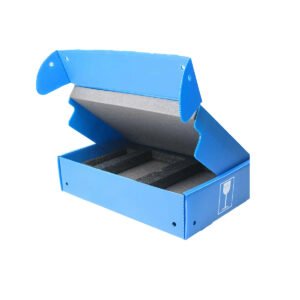
Types of Fish Packing Boxes Compared
This comparison covers every PP corrugated fish box in PPBOXY’s catalog—plus one specialist species box. Each type is optimized for a specific temperature zone, fish form, or species.
5 Types of Fish Packing Boxes
| Box Type |
Best For |
Temp Zone |
Key Feature |
Load Capacity |
PPBOXY Link |
| Iced Fish Box |
Whole fish on crushed ice |
0~4 °C |
Drainage port + slotted lid |
15–25 kg |
Ice Cold Seafood Box |
| Chilled Fish Box |
Fillets, steaks, prepared cuts |
-1~4 °C |
Sealed lid + odor barrier |
10–20 kg |
Fish Packaging Box |
| Frozen Fish Box |
Blast-frozen whole fish, IQF fillets |
-18~-25 °C |
5 mm+ walls, -25 °C impact rated |
20–30 kg |
Frozen Fish Shipping Box |
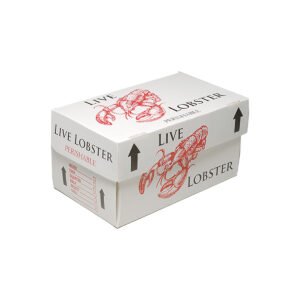
| Lobster Box |
Live and chilled lobster |
2~8 °C |
Ventilation slots + wet-pad holder |
10–15 kg |
Lobster Boxes |
| Shrimp Box |
Head-on/headless shrimp, prawns |
0~4 °C |
Shallow tray + inner dividers |
5–15 kg |
PP Corrugated Shrimp Box |
How to Choose: Decision Guide
- Selling whole fish at dock or market? → Iced Fish Box with drainage
- Shipping fillets to restaurants or retailers? → Chilled Fish Box with sealed lid
- Exporting frozen fish blocks by sea? → Frozen Fish Box with 5 mm+ walls
- Shipping live lobster? → Lobster Box with ventilation slots
- Packing shrimp for cold chain? → Shrimp Box with shallow trays
Need a broader comparison across all seafood types? See our PP Corrugated Seafood Box hub page. Comparing packaging materials? See our Seafood Box material decision guide.

PP Corrugated Fish Boxes vs EPS Foam vs Waxed Cardboard vs Wooden Crates
Four materials dominate fish packaging worldwide. Each has trade-offs that directly affect fish quality, logistics cost, and environmental compliance.
Four-Way Material Comparison
| Feature |
PP Corrugated |
EPS Foam |
Waxed Cardboard |
Wooden Crate |
| Waterproof |
✅ Inherently |
✅ Closed-cell |
❌ Wax coating wears off |
❌ Absorbs water |
| Reusability |
200–500+ cycles |
1–3 cycles (fragile) |
1 cycle (single-use) |
10–30 cycles |
| Impact Resistance |
High (flexes, rebounds) |
Low (cracks on impact) |
Low (crushes when wet) |
Medium (nails loosen) |
| Stacking (loaded) |
8 layers |
4 layers (crush risk) |
3 layers (when dry) |
6 layers |
| Drainage Port |
✅ Integrated mold |
❌ Not possible |
❌ Weakens structure |
✅ Gaps between slats |
| Print Quality |
✅ Full-color CMYK |
❌ Limited labeling |
⚠️ Degrades with moisture |
❌ Stencil only |
| Weight (empty, 60×40×20 cm) |
1.2–1.8 kg |
0.8–1.2 kg |
1.5–2.0 kg |
3.5–5.0 kg |
| Temp Range |
-25 °C to +70 °C |
-20 °C to +60 °C |
0 °C to +40 °C (wax melts >40 °C) |
-18 °C to +40 °C |
| Recyclability |
✅ 100% PP, #5 stream |
❌ Landfill/incinerate |
❌ Wax contaminates recycling |
⚠️ Treated wood only |
| Cost per Trip (200-cycle basis) |
$0.15–0.40 |
$1.00–2.50 |
$2.50–4.00 |
$0.80–1.50 |
Key takeaways:
- EPS foam is cheapest upfront but costs 3–6× more per trip over 200 cycles—and most markets now ban or tax EPS (EU Single-Use Plastics Directive, US state-level bans)
- Waxed cardboard appears “eco-friendly” but the wax coating renders it non-recyclable; it is effectively single-use plastic-coated waste
- Wooden crates work for whole fish at dockside but absorb water, harbor bacteria in wood grain, and fail ISPM-15 compliance unless heat-treated
- PP corrugated is the only material that is simultaneously waterproof, reusable 200–500+ times, fully recyclable, and rated from -25 °C to +70 °C
Want a deeper dive into material trade-offs? See our Seafood Box material decision guide (5 materials, 13 criteria).

Features That Matter for Fish Packaging
Not all PP box features matter equally for fish. Here are the five that make the biggest difference to fish quality, logistics efficiency, and regulatory compliance.
Integrated Drainage System for Iced Fish
Iced fish generates 2–5 liters of meltwater per 20 kg box per day. Without controlled drainage:
- Fish sits in meltwater → bacterial count doubles every 6–8 h
- Meltwater overflows → contaminates boxes below in stack
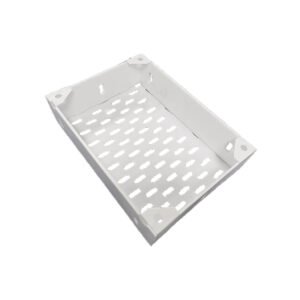
PPBOXY iced fish boxes offer three drainage configurations:
| Drainage Option |
Location |
Flow Rate |
Best For |
| Side Port (1 or 2) |
Lower side wall |
0.5–1.0 L/min |
Dock-to-market, short haul |
| Bottom Drain |
Center base |
1.0–2.0 L/min |
Warehouse storage, 8+ h hold |
| No Drainage |
— |
— |
Chilled/frozen fish (sealed insulation) |
Fish packing tip: Never use a drainage box for chilled fillets—meltwater from other boxes can contaminate sealed product through the port. See our Fish Packaging Box for sealed-chilled options.
-25 °C Impact Resistance for Frozen Fish
Frozen fish boxes face a unique threat: at -25 °C, many plastics become brittle. PP corrugated maintains flexibility down to -25 °C, passing:
- ISTA 3A drop test: 1.2 m free fall at -25 °C → zero cracking
- Compression test: 300 kg static load at -25 °C for 72 h → <2% deformation
- Thermal shock test: -25 °C → +22 °C → -25 °C (3 cycles) → no delamination
These ratings are critical for frozen fish exports: a cracked box at -25 °C means the entire shipment is rejected at customs.
Need a box rated specifically for deep-frozen fish? See our Frozen Fish Shipping Box.
Stackability & Cold Chain Logistics
| Stack Height |
Loaded Weight |
Application |
| 8 layers |
15 kg/box |
Warehouse pallet storage |
| 6 layers |
20 kg/box |
Truck transport |
| 4 layers |
25 kg/box |
Dockside staging |
Per-Trip Cost Over 200 Cycles
| Cost Factor |
PP Corrugated |
EPS Foam |
Waxed Cardboard |
| Box purchase price |
$30–60 |
$3–8 |
$5–10 |
| Trips before replacement |
200–500 |
1–3 |
1 |
| Cost per trip |
$0.15–0.40 |
$1.00–2.50 |
$5.00–10.00 |
| Washing/sanitizing |
$0.10–0.20 |
N/A (disposed) |
N/A (disposed) |
| Total cost per trip |
$0.25–0.60 |
$1.00–2.50 |
$5.00–10.00 |
PP corrugated fish boxes break even with EPS foam at 8–12 trips and with waxed cardboard at 2–3 trips.
Custom Branding & Compliance Printing
| Print Option |
Specification |
Application |
| CMYK Full Color |
Up to 6-color process |
Brand logo, product imagery |
| Handling Symbols |
UV-resistant ink |
“Keep Frozen,” “This Side Up,” “Fragile” |
| Traceability Codes |
QR code / batch number |
HACCP compliance, lot tracking |
| Species Label |
Pre-printed or adhesive slot |
Salmon, Tuna, Cod, Haddock, etc. |
Food Safety & Regulatory Compliance
| Standard |
Scope |
PPBOXY Compliance |
| FDA 21 CFR 177.1520 |
Food-contact PP resin |
✅ |
| EU Regulation 10/2011 |
Food contact materials (EU) |
✅ |
| GB 4806.7-2016 |
Food-contact plastics (China) |
✅ |
| HACCP Compatibility |
Washable + traceable surface |
✅ |
| ISPM-15 Exemption |
No wood components → no heat treatment needed |
✅ |

Fish Packing Applications Across the Supply Chain
Harvest & Dockside (0–4 h post-catch)
Whole fish on crushed ice → Iced Fish Box with side drainage ports. Fish are sorted by species and size at dock, packed with 1:3 ice-to-fish ratio (1 kg ice per 3 kg fish), and staged for transport. Boxes must drain continuously to prevent bacterial bloom.
→ See Ice Cold Seafood Box
Processing & Filleting
After filleting, fish portions must be sealed away from meltwater → Chilled Fish Box with closed lid and odor barrier. Species separation (e.g., salmon and whitefish) prevents cross-flavor transfer.
→ See Fish Packaging Box
Freezing & Cold Storage
Blast-frozen at -35 °C, then stored at -25 °C → Frozen Fish Box with 5 mm+ walls and -25 °C impact rating. No drainage needed; sealed insulation prevents freezer burn.
→ See Frozen Fish Shipping Box
Export & Long-Distance Shipping
Marine container shipping (2–6 weeks at -18 °C) demands boxes that resist 300 kg bottom-pallet compression and survive thermal shock during loading/unloading. PP corrugated’s -25 °C to +70 °C range handles both reefer container transit and dockside staging in tropical ports.
→ See our Seafood Box material decision guide for export-specific considerations.
Wholesale & Retail Distribution
Retail-ready packaging: branded boxes with species labels, handling symbols, and QR traceability codes. Stack 8 high in the cold room, then nest when empty to save 70% return-freight space.

FAQ — Fish Packing Boxes
Q1: What is the difference between fish packing boxes and fish packaging boxes?
“Fish packing boxes” and “fish packaging boxes” are often used interchangeably, but in PPBOXY’s catalog they serve different temperature zones. Fish packing boxes (this page) cover all temperature zones for fish—iced, chilled, and frozen—and help you choose the right box type. Fish packaging boxes (our Fish Packaging Box page) are specifically designed for chilled fish fillets at -1~4 °C with sealed insulation and odor barriers.
Q2: Which fish box do I need for whole fish on ice?
Use an iced fish box with drainage ports. Whole fish packed on crushed ice generates 2–5 liters of meltwater per day—without drainage, bacteria double every 6–8 hours. See our Ice Cold Seafood Box for boxes with integrated side or bottom drainage.
Q3: Can I use the same box for frozen and iced fish?
No. Frozen fish boxes are sealed with 5 mm+ walls and rated for -25 °C impact resistance; iced fish boxes have drainage ports that would let cold air escape in frozen storage. Using an iced box for frozen fish causes temperature excursions above -12 °C, triggering ice crystal growth and drip loss >10% on thawing. Use our Frozen Fish Shipping Box for deep-frozen applications.
Q4: How do PP corrugated fish boxes compare to EPS foam fish boxes?
PP corrugated boxes are reusable 200–500+ times vs. 1–3 times for EPS foam. At 8–12 trips, PP breaks even on cost; by 200 trips, PP costs 0.25–0.60pertripvs.0.25–0.60pertripvs.1.00–2.50 for EPS. PP is also fully recyclable (#5 PP stream), while EPS is banned or restricted in many markets under the EU Single-Use Plastics Directive. See the four-way material comparison above for full details.
Q5: Do you offer fish boxes for specific species like salmon, tuna, or cod?
Yes. All PPBOXY fish boxes can be custom-sized for species-specific requirements—e.g., long salmon boxes (120×40×20 cm), shallow tuna loin trays, or standard cod boxes (60×40×20 cm). We also offer species-specific boxes for shrimp and lobster. Contact us for custom sizing.
Q6: Are PP corrugated fish boxes food-safe?
Yes. PPBOXY fish boxes comply with FDA 21 CFR 177.1520 (US), EU Regulation 10/2011, and GB 4806.7-2016 (China) for food-contact materials. The polypropylene surface is non-toxic, non-absorbent, and HACCP-compatible—fully washable and sanitizable between uses.
Q7: What sizes of fish packing boxes are available?
Standard sizes include 60×40×20 cm (whole fish), 60×40×15 cm (fillets), and 40×30×15 cm (portions). Custom sizes are available from 30×20×10 cm to 120×60×40 cm. Wall thickness ranges from 3 mm (light-duty iced fish) to 5 mm+ (heavy-duty frozen fish). Request a quote for your specific dimensions.
Fish Packing Boxes