Seafood Box — What Material Is Right for Your Supply Chain?
A seafood box is any reusable or single-use container designed to store and ship fresh, chilled, or frozen seafood — from whole fish at auction to lobster tails by overnight courier. But “seafood box” is a category, not a material. The single most important decision a seafood buyer makes is not the box size or color — it is the material, because material determines everything else: waterproof rating, reusability, food safety compliance, stack height, return-shipping cost, and total cost per cycle.
This page helps you compare the five major seafood box materials and choose the one that matches your product, supply chain, and budget — then connects you to the right product page for detailed specifications and ordering.
Specifications
| Attribute |
Value |
| Material |
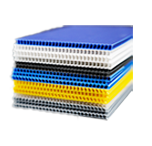
Polypropylene (PP) corrugated hollow sheet |
| Food Contact Grade |
FDA 21 CFR 177.1520 / EU 10/2011 / GB 4806.7 |
| Wall Type |
Twin-wall fluted sheet / Honeycomb sheet (optional) |
| Sheet Thickness |
3 mm, 4 mm, 5 mm (custom 2–12 mm) |
| Temperature Range |
−20 °C to +80 °C |
| Waterproof Rating |
100% waterproof (closed-cell PP) |
| Stack Height |
8–10 layers (standard), 4–6 layers (live product) |
| Reusability |
50–200+ cycles depending on duty level |
| Fold-Flat Volume Reduction |
75–80% |
| Drainage |
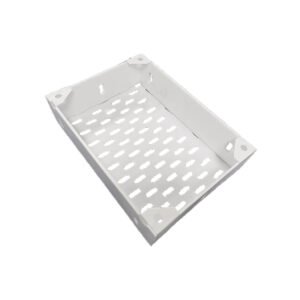
Optional integrated drain ports (pre-cut or custom) |
| Ventilation |
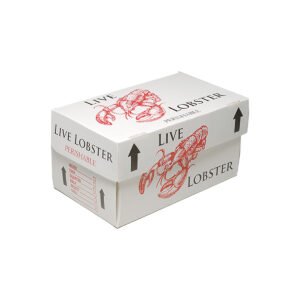
Optional precision ventilation holes (lobster/crab models) |
| Standard Sizes |
400×300×150 mm to 1200×800×400 mm |
| Custom Sizes |
Available (300+ standard molds + fully custom) |
| Colors |
15+ stock colors; custom Pantone matching |
| Printing |
Screen print (standard) / digital print (Corona-treated) |
| Accessories |
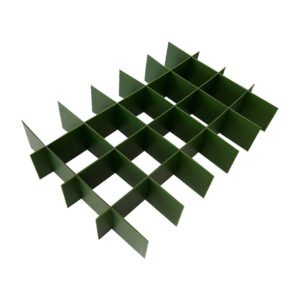
Dividers, absorbent pads, RFID tags, tamper-evident seals |
| ISPM-15 |
Exempt (solid plastic, no wood content) |
| Recyclability |
100% PP recyclable |
| Certifications |
FDA / EFSA / EU 10/2011 / GB 4806.7 / ISO 9001 |
| Lead Time |
7–15 business days (standard); 3–5 days (stock sizes) |
The Material Decision That Defines Your Operation
Every seafood supply chain has a “material moment” — the point where choosing the wrong box creates cascading costs:
| Wrong Material Choice |
Cascading Consequence |
| Cardboard in a wet market |
Box collapses → product damaged → customer refund |
| EPS foam in a high-stack cold room |
Box cracks → load shifts → worker injury risk |
| Non-food-grade plastic |
Fails import inspection → shipment detained → per-day demurrage charges |
| Single-use anything in a closed-loop route |
5× higher packaging cost per year vs reusable PP |
The right material choice eliminates these cascading failures. The sections below help you make it.
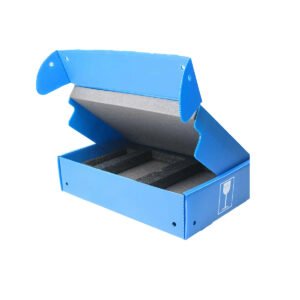
Why “Just Use Cardboard” Stops Working at Scale
Cardboard (even waxed) works for occasional, short-haul seafood shipments. But as volume, distance, or re-icing frequency increase, cardboard hits three hard limits simultaneously:
- Moisture absorption — Waxed cardboard absorbs water at seams and edges. Within 4–8 hours of ice-melt exposure, structural integrity drops 50–70%.
- No re-icing — Once a cardboard box is wet, you cannot open it, add ice, and reseal it reliably. Each re-icing stop requires a new box.
- Zero return economics — Cardboard is disposed after one use. In a closed-loop distribution route with 100+ trips/month, that is 1,200+ boxes per year vs 12–20 PP corrugated boxes.
For operations running more than 10 shipments per week through any route with ice, water, or humidity exposure, PP corrugated or aluminum are the only materials that maintain performance cycle after cycle.
Seafood Box Materials Compared — PP Corrugated vs EPS vs Waxed Cardboard vs Aluminum vs EPP
| Criterion |
PP Corrugated |
EPS Styrofoam |
Waxed Cardboard |
Aluminum |
EPP (Expanded PP) |
| Waterproof |
✅ Fully waterproof |
⚠️ Absorbs at seams |
❌ Seams absorb |
✅ Fully waterproof |
| Stacking (8+ layers) |
✅ No deformation |
❌ Cracks under load |
❌ Compresses when wet |
✅ Rigid but heavy |
⚠️ Deforms under heavy load |
| Reusability |
✅ 50–200+ cycles |
❌ Single-use |
❌ 1–3 cycles |
✅ 200+ cycles |
✅ 30–80 cycles |
| Food safety |
✅ FDA / EFSA certified |
⚠️ Microplastic leach risk |
⚠️ Wax may contain PFAS |
✅ Food-grade |
✅ Food-grade |
| Temperature range |
−20 °C to +80 °C |
−18 °C to +60 °C |
−10 °C to +40 °C |
−40 °C to +200 °C |
−40 °C to +120 °C |
| Weight |
Light (~0.8–1.5 kg) |
Very light (~0.2–0.5 kg) |
Light (~0.3–0.6 kg) |
Heavy (~3–5 kg) |
Light (~0.5–1.0 kg) |
| Insulation |
⚠️ Standard (twin-wall); good (honeycomb) |
✅ Good |
❌ Minimal |
❌ Conductive (no insulation) |
✅ Excellent |
| Custom branding |
✅ Direct print / Corona |
⚠️ Limited |
⚠️ Limited |
⚠️ Anodized or label |
⚠️ Limited |
| Fold-flat return |
✅ 75–80% volume reduction |
❌ Rigid, ships air |
❌ Disposed |
❌ Rigid, ships air |
| Break-even vs single-use |
10–15 cycles |
N/A |
N/A |
30–50 cycles |
20–30 cycles |
| Cost per cycle |
★★★★☆ Lowest |
★☆☆☆☆ Highest |
★★☆☆☆ High |
★★★☆☆ Moderate |
★★★☆☆ Moderate |
| Recyclability |
✅ 100% PP recyclable |
❌ Not widely recyclable |
❌ Wax contaminates stream |
✅ 100% recyclable |
✅ PP recyclable |
| Best for |
High-volume, closed-loop routes |
One-time retail display |
Occasional short-haul |
Ultra-hygienic facilities |
Insulated cold chain |
Quick recommendation: For most seafood operations — wholesale, processing, distribution, export — PP corrugated delivers the lowest total cost per cycle with full food-safety compliance. For deep-freeze or ultra-hygienic environments, aluminum is worth the higher upfront cost. For pure insulation without structural load, EPP excels. EPS and waxed cardboard are increasingly being phased out by food-safety regulations globally.
Choosing the Right Seafood Box by Temperature Zone
Seafood is never just “cold” — it occupies specific temperature zones, each with distinct packaging requirements:
| Temperature Zone |
Temp Range |
Preservation Method |
Best Box Material |
PPBOXY Product |
Learn More |
| Ice Cold |
0–4 °C |
Crushed ice / gel packs |
PP Corrugated (twin-wall or honeycomb) |
Ice Cold Seafood Box |
View → |
| Chilled Fresh |
0–10 °C |
Cold room / cool pack |
PP Corrugated (standard) |
Fresh Seafood Packaging Box |
View → |
| Frozen |
−20 °C |
Blast freezer / cold storage |
PP Corrugated (double-wall insulated) |
Frozen Fish Shipping Box |
View → |
| Live Product |
2–8 °C |
Moist ventilation |
PP Corrugated (vented) |
Lobster Boxes / Crab Packing Box |
Lobster → / Crab → |
| Sashimi-Grade |
0–4 °C |
Ice + strict cold chain |
PP Corrugated (honeycomb insulated) |
Ice Cold Seafood Box (honeycomb) |
View → |
| Ambient / Dry |
10–25 °C |
No cooling needed |
Any (PP, cardboard, aluminum) |
Corrugated Plastic Packaging |
View → |
Need a full overview of PP corrugated seafood boxes? See our PP Corrugated Seafood Box category guide for product-type variants (shrimp, fish, lobster, shellfish).
Why PP Corrugated Is the Most Cost-Effective Seafood Box
The 5-material comparison above shows that PP corrugated leads on total cost-per-cycle for the majority of seafood operations. Here is why:
Waterproof Without Coatings or Liners
PP corrugated is intrinsically waterproof — the closed-cell polypropylene structure repels water at the molecular level. No wax coating (which degrades), no plastic liner (which tears), no sealant (which fails at seams). This means:
- Zero moisture absorption — even after 72 hours submerged in ice water
- No coating degradation — no wax to melt, no liner to detach
- Hose-down cleaning — sanitize between lots in 30 seconds, no drying time
50–200+ Reusable Cycles vs Single-Use Alternatives
| Material |
Cycles |
Cost/Box (est.) |
Cost/Cycle |
Annual Cost (100 trips/mo) |
| PP Corrugated |
50–200 |
$8–15 |
$0.04–0.30 |
$48–360 |
| EPS Styrofoam |
1 |
$1–3 |
$1.00–3.00 |
$1,200–3,600 |
| Waxed Cardboard |
1–3 |
$1.50–4 |
$0.50–4.00 |
$600–4,800 |
| Aluminum |
200+ |
$25–50 |
$0.13–0.25 |
$150–300 |
| EPP |
30–80 |
$10–20 |
$0.13–0.67 |
$150–800 |
PP corrugated break-even vs EPS: 10–15 trips. 3-year savings vs all single-use: 40–70%.
Food-Contact Certified (FDA / EFSA / EU 10/2011)
All PPBOXY PP corrugated seafood boxes are manufactured from food-grade polypropylene compliant with:
- FDA 21 CFR 177.1520 — Olefin polymers for food contact (USA)
- EU Regulation 10/2011 — Plastic materials in contact with food (Europe)
- GB 4806.7 — Food contact plastics (China)
EPS foam faces growing regulatory scrutiny over microplastic leaching in food-contact applications. Waxed cardboard may contain PFAS compounds. PP corrugated provides a compliance-certified alternative that satisfies current and anticipated food-safety regulations globally.
Fold-Flat Return Shipping (75–80% Volume Savings)
One of the most overlooked cost factors in seafood packaging is the return trip. Rigid boxes (EPS, aluminum, EPP) ship air on the way back. PP corrugated seafood boxes fold flat, reducing return volume by 75–80%:
| Box Type |
Outbound Volume |
Return Volume |
Return Freight Cost |
| PP Corrugated (folded) |
1.0 m³ |
0.2–0.25 m³ |
20–25% of outbound |
| EPS Foam (rigid) |
1.0 m³ |
1.0 m³ |
100% of outbound |
| Aluminum (rigid) |
1.0 m³ |
1.0 m³ |
100% of outbound |
In a closed-loop distribution route with daily backhaul, fold-flat savings alone can offset the higher unit cost of PP corrugated within 5–8 trips.
Custom Sizes, Colors & Branding for Species Identification
PP corrugated is the most customizable seafood box material:
| Customization |
PP Corrugated |
EPS |
Cardboard |
Aluminum |
EPP |
| Custom dimensions |
✅ 300+ molds |
❌ Tooling cost prohibitive |
✅ |
⚠️ High cost |
⚠️ High cost |
| Color coding |
✅ 15+ colors + Pantone |
⚠️ White only |
⚠️ Limited |
⚠️ Metallic only |
⚠️ Limited colors |
| Direct printing |
✅ Screen / Corona digital |
❌ |
⚠️ On wax only |
⚠️ Anodized |
❌ |
| Drain port placement |
✅ Custom die-cut |
❌ |
❌ |
⚠️ Machined |
❌ |
| Ventilation holes |
✅ Custom die-cut |
❌ |
⚠️ Pre-cut |
⚠️ Machined |
⚠️ Molded |
Color coding is especially valuable in high-volume seafood operations: blue = white fish, red = shellfish, green = crustaceans — workers identify contents at a glance without opening boxes.
Seafood Box Applications by Facility Type
Fish Markets & Auction Houses
At auction houses and wet markets, boxes are hosed down between lots, stacked 8+ layers high, and reloaded within minutes. PP corrugated boxes survive this cycle because they are waterproof (hose-down ready), rigid under wet stacking, and can be branded with lot numbers or auction IDs via direct printing. Unlike cardboard that softens with each rinse, PP corrugated is identical on cycle 1 and cycle 100.
Processing Plants & Cold Rooms
Processing plants require HACCP-compliant packaging that can withstand sanitization chemicals, repeated thermal cycling (−20 °C cold rooms to +20 °C loading docks), and continuous wet contact. PP corrugated seafood boxes are impervious to water and common cleaning agents, cannot harbor bacteria in wall crevices (smooth non-porous surface), and fold flat for storage between production runs. See our PP Corrugated Seafood Box guide for plant-specific variants.
Restaurant & HORECA Supply Chain
Restaurants need seafood to arrive pristine, not in a soggy cardboard box. PP corrugated boxes maintain structural integrity throughout the delivery run, keeping contents separated and elevated above any meltwater. For iced-fresh delivery to restaurants, see our Ice Cold Seafood Box with integrated drain ports. For direct-to-door delivery, see our Seafood Delivery Box.
Retail Supermarkets & Fresh Counters
At retail, the box is both a shipping container and a display unit. PP corrugated seafood boxes can be custom-printed with brand graphics and color-coded by species — moving directly from the delivery truck to the cold display case without repacking. Their clean, professional appearance replaces the “recycled cardboard box” look that signals low-end product to consumers.
International Export & Multi-Modal Shipping
Export shipments face the harshest test: truck → port → ship → port → truck over 5–21 days. PP corrugated seafood boxes are rated for −20 °C to +80 °C, comply with ISPM-15 exemption (solid plastic — no fumigation certificate), and fold flat for the empty return container. For frozen export, see Frozen Fish Shipping Box. For species-specific export packaging, browse the full Seafood Packaging category.
Frequently Asked Questions
What is the best material for a seafood box?
A: For most commercial seafood operations, PP corrugated (polypropylene twin-wall sheet) is the best material: waterproof, food-contact certified (FDA/EFSA), reusable for 50–200+ cycles, fold-flat for return shipping, and cost-effective after 10–15 trips vs single-use alternatives. Aluminum is superior for ultra-hygienic facilities but costs 3–5× more upfront. EPP offers better insulation but lower reusability and no fold-flat option. See the full material comparison table above for detailed criteria.
How does a PP corrugated seafood box compare to EPS styrofoam?
A: PP corrugated is waterproof, stackable to 8+ layers, reusable for 50–200+ cycles, fold-flat for return shipping, and FDA food-contact certified. EPS foam absorbs water at seams, cracks under stacking, is single-use, ships air on return, and faces regulatory scrutiny over microplastic leaching. PP corrugated costs more per unit but breaks even after 10–15 trips and saves 40–60% on total packaging cost over a 3-year contract.
Which type of seafood box do I need?
A: It depends on your product and temperature requirement:
Is a PP corrugated seafood box food-contact safe?
A: Yes. All PPBOXY PP corrugated seafood boxes are manufactured from food-grade polypropylene compliant with FDA 21 CFR 177.1520 (USA), EU Regulation 10/2011 (Europe), and GB 4806.7 (China). Migration test reports and compliance certificates are available on request for import clearance and HACCP audits.
How many times can a PP corrugated seafood box be reused?
A: Depending on duty level: 150–200+ cycles for light duty (retail display), 80–150 cycles for medium duty (regional distribution), and 50–80 cycles for heavy duty (export + multi-hub re-icing). Even at 50 cycles, the per-trip cost is 70–85% lower than single-use EPS or cardboard alternatives.
Can PP corrugated seafood boxes be returned flat to save shipping costs?
A: Yes. Most PPBOXY seafood box models feature a fold-flat design that reduces return-shipping volume by 75–80%. One pallet of folded PP boxes replaces four pallets of rigid EPS crates. Fold-flat savings alone can offset the higher unit cost of PP corrugated within 5–8 trips on a closed-loop route.
What customization options are available for seafood boxes?
A: PPBOXY offers full OEM/ODM customization for PP corrugated seafood boxes: 300+ standard size molds or fully custom dimensions, 15+ stock colors plus Pantone matching for species/grade coding, screen or digital printing (Corona-treated surface for high-resolution graphics), custom drain port and ventilation hole placement, and accessories including dividers, absorbent pads, RFID tags, and tamper-evident seals.
Seafood Box