PP Kotak Beralun untuk Buncis Hijau — Peti Berudara, Selamat untuk Pengangkutan Buncis Snap dan Buncis Perancis
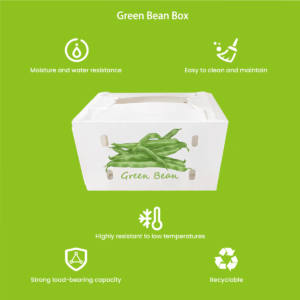
The Petak Kacang Hijau, diperbuat daripada berkualiti tinggi Papan Berongga Polipropilena (PP), menggabungkan ketahanan, kecekapan, dan kelestarian. Direka khas untuk mengoptimumkan penyimpanan kacang hijau, kotak ringan namun kukuh ini memastikan kebolehsapuan udara, ketahanan terhadap perosak, dan perlindungan kalis air. Ia merupakan penyelesaian yang menjimatkan kos dan mesra alam untuk industri pertanian dan penyimpanan.
Ciri-ciri Utama yang Melindungi Kacang Hijau daripada Layu, Penghasilan Serat, dan Kerosakan akibat Suhu Dingin
Kacang hijau adalah salah satu sayur-sayuran yang paling cepat rosak dalam pengedaran komersial. Kadar pernafasannya adalah antara yang tertinggi bagi mana-mana hasil pertanian — kira-kira dua kali ganda berbanding sayur berdaun — yang bermakna ia menghasilkan haba, kelembapan, dan etilena lebih pantas berbanding hampir semua tanaman lain dalam rantaian bekalan anda. Petak Luka-luka PP Bergelombang untuk Kacang Hijau direka untuk menguruskan ancaman tiga serangkai itu dari ladang hingga ke peruncit.
Dinding bergelombang berventilasi untuk penyingkiran haba dan etilena dengan pantas
Struktur beralur papan berongga PP menghasilkan saluran udara berterusan di sepanjang setiap panel dinding. Tidak seperti peti plastik berkira-kira dinding yang memerangkap gas pernafasan, Green Bean Box membenarkan udara panas yang mengandungi etilena keluar secara pasif walaupun peti disusun di atas palet. Ini amat penting kerana pengumpulan etilena mempercepat pembangunan gentian — proses yang menjadikan kacang snap yang lembut menjadi produk yang berkayu dan berserat dalam masa 36–48 jam pada suhu persekitaran.
Perlindungan kecederaan sejuk tanpa pembekuan
Kacang hijau sensitif terhadap sejuk: suhu di bawah 7°C (44°F) menyebabkan bintik perang kemerahan dan Perubahan warna perang di permukaan pod, manakala suhu melebihi 10°C (50°F) mempercepat layu dan pembentukan serat. Jurang udara 8–12 mm dalam papan berongga PP berfungsi sebagai penampan terma, melambatkan lonjakan suhu semasa terdedah di dok pemuatan dan menstabilkan persekitaran dalaman dalam julat selamat 7–10°C. Ini adalah ciri yang tidak dapat disediakan oleh peti dinding pepejal atau kotak kadbod.
Penahanan kelembapan tanpa kondensasi
Pada kira-kira 90 % kandungan air, kacang hijau kehilangan kualiti visual dengan cepat dalam persekitaran kelembapan rendah — batang layu, polong menjadi lembut, dan warna pudar daripada hijau terang kepada zaitun kusam. Struktur gelombang separa tertutup Green Bean Box mengekalkan kelembapan relatif 90–95 % di dalam kotak, mencegah pengeringan tanpa menghasilkan kondensasi yang menggalakkan reput lembut bakteria. Keseimbangan antara pengudaraan dan pengekalan lembapan dicapai melalui mikro-kelenturan semula jadi saluran bergalur PP.
Penyerapan hentakan untuk mencegah lebam
Kerosakan mekanikal — calar, hirisan, dan tompok lebam — adalah punca utama penolakan kacang hijau semasa penerimaan. Struktur teras berongga papan PP menyerap dan menyebarkan tenaga hentakan, mengurangkan kejadian lebam sebanyak anggaran 40–60 % berbanding peti plastik kaku yang menghantar kejutan terus ke hasil tuaian.
Aplikasi Industri — Dari Penuaian ke Rak Runcit
Penuaian ladang dan pembungkusan di ladang
Kacang hijau biasanya dipetik dengan tangan ke dalam bekas lapangan dan mesti mula didinginkan dalam masa 1–2 jam selepas dituai. Kotak Kacang Hijau PP ringan boleh dibawa terus ke ladang, diisi, dan diangkut ke stesen penyejukan tanpa perlu dikemas semula — satu sentuhan dari pokok ke rantaian sejuk.
Pusat pengedaran rantaian sejuk
Selepas hidropenyejukan atau penyejukan awal udara paksa, kacang disimpan pada 7–10°C dan kelembapan relatif 90–95%. Sifat penimbal terma Green Bean Box mengekalkan julat sempit ini walaupun semasa peralihan dari bilik sejuk ke lori sejuk, di mana lonjakan suhu ringkas adalah perkara biasa.
Pasaran borong dan pengedaran terminal
Di terminal borong, kacang mungkin berada di dok selama beberapa jam sebelum diedarkan. Dinding kotak yang berventilasi terus menyingkirkan haba pernafasan, dan strukturnya yang mengekalkan kelembapan mengelakkan layu pantas yang berlaku pada petak kadbod terbuka.
Eksport dan penghantaran jarak jauh
Untuk kacang hijau yang merentas sempadan antarabangsa melalui laut atau udara, penebat kotak PP memperlahankan fluktuasi suhu semasa pemuatan, pengangkutan, dan penahanan kastam. Kotak ini mengekalkan integriti struktur sepenuhnya walaupun selepas 4–6 minggu penghantaran rantaian sejuk, tidak seperti kadbod bersalut lilin yang semakin lembut dalam persekitaran kelembapan tinggi.
Petak Kacang Hijau Beralun PP berbanding Petak Kadbod dan Plastik Pepejal
| Kriteria |
PP Kotak Kacang Hijau Bergelombang |
Kotak Kadbod Berlapis Lilin |
Petak Plastik Padat (HDPE) |
| Pengudaraan Etilena |
✅ Dinding beralur menghasilkan aliran udara pasif walaupun disusun bertindih. |
❌ Dinding pepejal memerangkap etilena → pembentukan gentian dengan pantas |
❌ Dinding pepejal memerangkap gas; hanya bergantung pada reka bentuk bertutup terbuka |
| Penampanan kecederaan sejuk |
✅ Jurang udara 8–12 mm menampan lonjakan suhu dalam julat 7–10°C |
❌ Tiada penebat; kadbod menghantar sejuk terus ke kacang |
❌ Dinding kaku menghantar suhu secara langsung |
| Penahanan Kelembapan |
✅ 90–95% RH dikekalkan tanpa kondensasi |
⚠️ Menyerap kelembapan → melembutkan; tidak dapat mengekalkan kelembapan relatif yang konsisten |
⚠️ Reka bentuk terbuka membolehkan kelembapan keluar → pengeringan |
| Kesesuaian Hydrocool |
✅ Kalis air sepenuhnya; masuk dan keluar dari hydrocooler tanpa berubah |
❌ Melambatkan proses tetapi tidak mencegah kerosakan |
✅ Kalis air tetapi tiada penebat |
| Pencegahan lebam |
✅ Teras berongga menyerap hentakan; 40–60% lebam berkurang berbanding yang kaku |
⚠️ Sedikit penyerapan hentakan apabila kering; tiada apabila basah kuyup |
❌ Dinding kaku menghantar hentakan secara langsung untuk menghasilkan |
| Berat setiap unit (kosong) |
✅ 0.8–1.5 kg — dibawa dengan satu tangan |
⚠️ 1.0–1.8 kg (kering); lebih berat apabila basah |
❌ 2.5–4.0 kg — angkatan dua tangan |
| Kitaran Penggunaan Semula |
✅ 50–100+ kitaran |
❌ 1–3 kitaran sebelum kegagalan struktur |
✅ 200+ kitaran (tetapi tiada penebat atau pengudaraan) |
| Kebolehkumpulanan ketika basah |
✅ Tiada perubahan dalam kekuatan mampatan |
❌ Kekuatan susunan menurun 60%+ apabila tepu |
✅ Tidak terjejas oleh kelembapan |
| Corak Lubang Ventilasi Tersuai |
✅ Pemotongan acuan mengikut spesifikasi tanpa kos alatan tambahan untuk kuantiti besar |
❌ Lubang ventilasi melemahkan kekuatan basah yang sudah terhad |
⚠️ Hanya slot terbentuk; tidak boleh disesuaikan selepas pengeluaran |
Intipati utama: Karton gagal pada saat kacang hijau paling memerlukannya — semasa dan selepas hidropenyejukan, serta dalam jendela rantaian sejuk 7–10°C di mana penebat dan pengudaraan diperlukan serentak. Petak plastik pepejal kalis air dan tahan lama tetapi tidak memberikan penampanan haba langsung dan tiada pengudaraan pasif, menjadikannya tidak sesuai untuk hasil yang sensitif terhadap etilena dan sejuk.
Soalan Lazim
Q1: Pada julat suhu apakah kacang hijau perlu disimpan dan diangkut?
Kacang hijau hendaklah disimpan pada suhu 7–10°C (44–50°F) dengan kelembapan relatif 90–95%. Di bawah 7°C, kecederaan sejuk menyebabkan bintik perang dan perubahan warna coklat; di atas 10°C, layu pantas dan pembentukan serat bermula. Insulasi jurang udara PP Green Bean Box membantu mengekalkan tetingkap selamat yang sempit ini semasa peralihan suhu.
Q2: Bagaimana kotak ini mengelakkan kacang hijau menjadi berserat dan berbenang?
Pembentukan serat pada kacang hijau dipacu oleh pengumpulan etilena dan suhu yang tinggi. Saluran dinding bergelombang Kotak Kacang Hijau menghasilkan pengudaraan pasif yang menyingkirkan etilena dan haba pernafasan walaupun kotak-kotak disusun rapat. Dengan mengekalkan paras etilena yang rendah dan suhu dalam julat 7–10°C, kotak ini menangguhkan pembentukan serat kira-kira 48–72 jam berbanding bekas tanpa pengudaraan.
Q3: Apakah perbezaan antara Green Bean Box dan Celery Box?
Kedua-duanya diperbuat daripada papan gelombang PP dan digunakan untuk aplikasi Pembungkusan Pertanian, tetapi ia menangani fisiologi tanaman yang berbeza. The Petak Kacang Hijau sasaran penghapusan etilena dan pencegahan kecederaan sejuk — kacang hijau sangat sensitif terhadap etilena dan sensitif terhadap sejuk, memerlukan jendela sempit 7–10°C. The Petak Seleri memberi keutamaan Pendukung batang tegak dan pengekalan kelembapan — seleri adalah batang berongga yang layu apabila kehilangan kelembapan sebanyak 2 % dan patah apabila dibengkokkan. Kotak Kacang Hijau mempunyai saluran pengudaraan yang lebih lebar; Kotak Selery mempunyai dinding sisi yang lebih tinggi dengan alur dalaman.
Q4: Bolehkah kotak ini digunakan untuk jenis kacang lain seperti kacang Perancis atau kacang runner?
Ya. Reka bentuk yang berventilasi dan mengekalkan kelembapan ini sesuai untuk semua jenis kacang polong segar, termasuk kacang Perancis (haricots verts), kacang runner, dan kacang snap. Julat penampan termal kotak ini pada 7–10°C selari dengan keperluan rantaian sejuk untuk semua kacang polong segar.
Q5: Adakah Green Bean Box sesuai untuk penyimpanan kacang kering (kacang hijau, kacang merah, dan sebagainya)?
Tidak. Kotak ini direka untuk Pengangkutan kacang polong segar dengan pengudaraan dan kawalan kelembapan. Untuk penyimpanan kacang kering — yang memerlukan bekas berpenutup kedap, kalis lembapan, dan kalis perosak — produk papan berongga PP yang berbeza akan lebih sesuai. Hubungi kami untuk penyelesaian penyimpanan kacang kering.
Q6: Berapa banyak kitaran semula guna yang boleh saya jangkakan?
Dengan pengendalian komersial biasa, 50–100+ kitaran. Papan berongga PP menahan retakan, kerosakan UV, dan pendedahan kimia. Setelah kotak mencapai akhir hayatnya, ia boleh dikitar semula sepenuhnya menjadi produk PP baru.
 Petak Kacang Hijau