Plastic Corrugated Pads — 3/16″ Reusable PP Layer Pads for Multi-Industry Protection
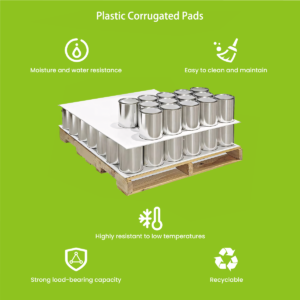
The Plastic Corrugated Pads, made from 3/16″ thick polypropylene (PP), offer unmatched durability, reusability, and resistance to dirt, grease, and water. These pads are designed to provide superior protection for goods during storage, transportation, and handling. Their rigid yet lightweight structure ensures long-term usability, making them a cost-effective and eco-friendly solution for various industries.
Key Features & Benefits of 3/16″ Plastic Corrugated Pads
PP corrugated pads at 3/16″ thickness (approximately 4.8mm) deliver the optimal balance of rigidity and weight for industrial layer separation. Unlike thinner sheets that deform under load, or thicker boards that add unnecessary weight, this specification has become the industry standard for reusable layer pads in logistics and packaging operations.
Dirt, Grease & Water Resistance
Polypropylene is inherently hydrophobic and chemically stable. These pads resist oil, grease, cleaning agents, and moisture — conditions that rapidly degrade cardboard and wood. In food processing and pharmaceutical logistics, this resistance is critical for maintaining hygiene compliance without frequent pad replacement.
Rigid Yet Lightweight Structure
At 3/16″ thickness, each pad provides sufficient flexural strength to support stacked loads while adding minimal weight to the overall shipment. This directly reduces freight costs per pallet compared to wooden boards or thick HDPE sheets.
Reusable for 200+ Cycles
A single PP corrugated pad replaces 200+ single-use cardboard sheets. For high-volume logistics operations, this reduces recurring packaging procurement and waste disposal costs. The material does not absorb moisture or delaminate, ensuring consistent performance across hundreds of reuse cycles.
Industrial Applications: Logistics, Packaging, Construction & More
Logistics & Warehouse Layer Separation
The primary application is separating stacked layers of goods on pallets or in large boxes. The pad distributes pressure evenly across the layer below, preventing point-load damage to delicate surfaces. For bottling and beverage operations, pair these pads with PP corrugated dividers for complete vertical-and-horizontal protection.
Fragile Goods Packaging
Electronics, glassware, and precision instruments require cushioning between layers. PP corrugated pads provide a stable, non-abrasive barrier that prevents surface scratching and impact transfer between stacked items.
Construction & DIY Surface Protection
On renovation sites, these pads serve as temporary protective layers for flooring, countertops, and walls during painting or installation work. They are easy to cut with standard utility knives and resist paint, mortar, and chemical spills.
Agricultural & Food Handling
For produce packing lines, the pads act as a clean, washable barrier between fruit/vegetable layers. Unlike cardboard that absorbs moisture and promotes mold growth, PP pads can be pressure-washed and reused.
Advertising & Signage Substrate
The flat, rigid surface accepts direct printing and serves as a substrate for promotional signs, event displays, and point-of-sale materials. The 3/16″ thickness provides sufficient rigidity for free-standing A-frame signs.
Plastic Corrugated Pads vs Cardboard & Wooden Boards
| Feature |
Plastic Corrugated Pads (PP) |
Cardboard Sheets |
Wooden Boards |
| Reusability |
✅ 200+ cycles |
❌ Single use (1–2 max) |
⚠️ 10–20 cycles |
| Water Resistance |
✅ Inherently waterproof |
❌ Absorbs moisture, weakens |
⚠️ Absorbs water, warps |
| Grease/Chemical Resistance |
✅ Resists oil, grease, cleaners |
❌ Degrades, contaminates |
⚠️ Surface coating required |
| Weight (per m²) |
✅ ~800–1200g |
✅ ~600–900g |
❌ ~3000–5000g |
| Cost Per Cycle |
✅ Very low (amortized) |
❌ High (continuous repurchase) |
⚠️ Medium |
| ISPM 15 (International Shipping) |
✅ Exempt (non-wood) |
✅ Exempt |
❌ Requires heat treatment |
| Recyclable |
✅ Yes (PP Resin Code 5) |
✅ Yes (paper recycling) |
⚠️ Limited (treated wood) |
Why PP pads win: The combination of reusability + water/chemical resistance + ISPM 15 exemption makes them the only viable choice for international logistics operations. Cardboard fails in humid environments; wooden boards add excessive weight and require phytosanitary certification for cross-border shipping.
Frequently Asked Questions
Q1: What is the difference between “plastic corrugated pads” and “layer pads”?
They are the same product. “Layer pads” is the functional description (pads placed between layers of stacked goods), while “plastic corrugated pads” describes the material. In the Layer PP bottle/beverage mat category, you will also find PP corrugated dividers — which are vertically slotted sheets that separate individual bottles or containers within the same layer. Pads protect between layers; dividers protect within a layer.
Q2: Can these pads be used in direct food contact applications?
Yes. We can manufacture these pads from food-grade polypropylene resin that complies with FDA and EU 10/2011 food contact regulations. Please specify food-contact requirements when requesting a quote, as food-grade resin carries a different certification and traceability protocol.
Q3: How many pads do I need for a standard pallet?
This depends on your box/carton height and the total pallet height. A typical pallet configuration uses one pad per layer. For a standard 1.5m tall pallet with 15cm-high boxes, you would need approximately 10 pads. Contact us with your specific dimensions for a tailored recommendation.
Q4: Can I get custom-printed pads with my company logo?
Absolutely. We offer full-color printing on one or both sides of the pad. This is particularly valuable for branded logistics operations where pad identification and brand visibility matter. Minimum order quantities apply — contact us with your design requirements.
Q5: Are these pads suitable for automated packaging lines?
Yes. The rigid 3/16″ thickness and consistent dimensional tolerances make them compatible with automated layer-insertion equipment. We can supply them in anti-static PP formulation for automated electronics packaging lines — please specify this requirement in your inquiry.
Q6: How do I clean and maintain these pads?
Simply wash with water and mild detergent. The PP surface does not absorb oils or chemicals, so residues rinse off completely. For food-grade applications, the pads can be pressure-washed and sanitized without degradation. Allow to air-dry before restacking.
 Plastic Corrugated Pads