Why Polypropylene Corrugated Pads Are the Industry Standard for Bottle & Container Stacking
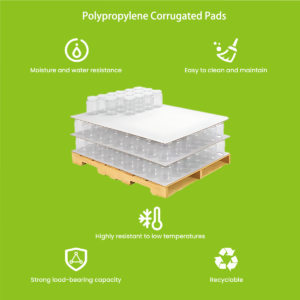
Polypropylene corrugated pads have become the industry standard for separating stacked layers of bottles and containers on pallets and in shipping boxes. From beer and wine bottles to pharmaceutical vials and industrial drums, every bottling and container operation faces the same challenge: preventing inter-layer damage during storage, palletizing, and transport.
The Problem PP Layer Pads Solve
When glass bottles, pharmaceutical containers, or fragile jars are stacked directly on top of each other, three failure modes occur:
- Point-load cracking — Uneven weight distribution concentrates pressure on individual bottles, causing breakage at contact points.
- Impact transfer — Shocks during transport propagate vertically through unseparated layers, amplifying damage from top to bottom.
- Contamination migration — Without a hygienic barrier between layers, dust, moisture, and chemical residues transfer between product tiers.
PP corrugated pads placed between each layer eliminate all three failure modes simultaneously — distributing load evenly, absorbing vertical shocks, and providing a clean, waterproof barrier.
But “PP layer pad” isn’t one product — it’s a category with 5 distinct forms.
The term “polypropylene corrugated pads” describes the material (polypropylene) and structure (corrugated/twin-wall), but within this category, there are five distinct product forms designed for different protection roles. Understanding which form fits your operation is the key to getting the right solution — and this guide will walk you through each one.
5 Types of PP Layer Pads for Bottle & Container Protection Compared
Before choosing a layer pad, you need to understand the five distinct forms available. Each serves a different protection role in the bottling and container supply chain.
| Pad Type |
Best For |
Key Advantage |
Thickness |
Reusability |
PPBOXY Page |
| Flat Layer Pads |
General inter-layer separation |
Universal, lowest cost |
3/16″ (4.8mm) |
200+ cycles |
Plastic Corrugated Pads |
| Special-Treated Pads |
UV-exposed, flammable, or static-sensitive environments |
UV/FR/ESD/Corona treated |
2–6mm |
200+ cycles |
Corrugated Plastic Layer Pad |
| Vertical Dividers |
Preventing bottles from colliding horizontally |
Cell isolation, die-cut slots |
3–5mm |
200+ cycles |
PP Corrugated Dividers |
| Precision Die-Cut Pads |
Beverage filling lines requiring exact bottle spacing |
Custom slot patterns, high throughput |
2–5mm |
200+ cycles |
Layer Pads Dividers |
| Bottle Base Trays |
Bottom-layer positioning and load distribution |
Concave cradle, bottom support |
4–6mm |
200+ cycles |
Hollow Board Bottle Tray
|
How to choose:
PP vs Cardboard vs Wooden Boards
| Feature |
Polypropylene Corrugated Pads |
Cardboard Sheets |
Wooden Boards |
| Reusability |
✅ 200+ cycles |
❌ 1–2 uses max |
⚠️ 10–20 cycles |
| Water Resistance |
✅ Inherently waterproof |
❌ Absorbs moisture → weakens & contaminates |
⚠️ Absorbs water → warps |
| Grease/Chemical Resistance |
✅ Resists oil, solvents, cleaning agents |
❌ Degraded by grease & chemicals |
⚠️ Requires surface coating |
| Hygiene Compliance |
✅ FDA / EU 10/2011 (food-grade option) |
❌ Cannot meet pharma/food standards after moisture exposure |
❌ Splinters & contamination risk |
| ISPM 15 Exemption |
✅ Exempt (non-wood) |
✅ Exempt |
❌ Requires heat treatment for international shipping |
| Weight (per pad) |
✅ ~800–1200g/m² |
✅ ~600–900g/m² |
❌ ~3000–5000g/m² |
| Cost Per Cycle |
✅ ~$0.15–0.40/cycle (amortized 200×) |
❌ ~$1.50–2.50/cycle (single use) |
⚠️ ~$0.80–1.50/cycle |
| Impact Absorption |
✅ Corrugated structure absorbs vertical shocks |
❌ Flat structure → shock transfers |
⚠️ Rigid → shock transfers |
| Custom Slotting |
✅ Die-cut available (on request) |
✅ Easy to cut |
❌ Requires CNC/saw |
| Recyclability |
✅ PP Resin Code 5 |
✅ Paper recycling |
⚠️ Limited (treated wood) |
Why PP wins for bottle & container operations: The combination of waterproof hygiene + ISPM 15 exemption + 200× reusability makes PP the only viable material for international beverage and pharmaceutical logistics. Cardboard fails in humid warehouse environments; wooden boards add excessive weight and require phytosanitary certification for cross-border shipping.
Key Features & Benefits of Polypropylene Corrugated Pads
Lightweight Yet Strong — The 3/16″ Balance Point
At 3/16″ (4.8mm) thickness, polypropylene corrugated pads deliver the optimal balance of rigidity and weight for bottle layer separation. Thinner sheets deform under stacked bottle loads; thicker boards add unnecessary freight weight. This specification has become the beverage industry default for reusable inter-layer pads.
Load Distribution Data:
| Bottle Type |
Typical Layer Weight |
Pad Load Per m² |
Recommended Pad Thickness |
| Beer bottles (330mL) |
~15–20 kg/layer |
~60–80 kg/m² |
3/16″ (4.8mm) |
| Wine bottles (750mL) |
~25–35 kg/layer |
~100–140 kg/m² |
3/16″–5mm |
| Pharma vials (small) |
~5–10 kg/layer |
~20–40 kg/m² |
3/16″ (4.8mm) |
| Industrial drums (20L) |
~40–60 kg/layer |
~160–240 kg/m² |
5mm+ |
Excellent Shock Absorption — Corrugated Structure vs Flat Materials
The twin-wall corrugated structure of PP pads absorbs vertical impact energy that flat cardboard or wooden boards simply transfer through. When a pallet is dropped 5cm during forklift handling, the corrugated flutes compress and release — absorbing the shock before it reaches the bottles below. Flat materials pass this impact directly to the product layer, increasing breakage risk by 3–5× compared to corrugated PP.
Moisture & Chemical Resistance — Critical for Beverage & Pharma Operations
Polypropylene is inherently hydrophobic and chemically inert. These pads resist:
- Wash-down environments — Beverage and pharma facilities use daily water/chemical wash-downs. Cardboard pads absorb this moisture and weaken within hours; PP pads remain intact indefinitely.
- Condensation in cold chains — When bottles transition from cold storage to ambient temperature, condensation forms between layers. PP pads do not absorb this moisture, preventing mold growth and label damage.
- Oil and solvent exposure — Industrial container operations involve grease, lubricants, and cleaning agents that rapidly degrade cardboard. PP resists all common industrial chemicals.
For food-contact and pharmaceutical applications, we can manufacture pads from FDA-compliant and EU 10/2011-certified resin — specify this requirement when requesting a quote.
Reusable & Eco-Friendly — 200+ Cycles vs Single-Use Alternatives
Cycle Cost Comparison (per pad, 1000×1200mm standard):
| Material |
Cost Per Pad |
Cycles |
Cost Per Cycle |
Annual Savings (10 pads, 5 layers/pallet) |
| PP Corrugated Pad |
$3.00–5.00 |
200+ |
$0.015–0.025 |
$7,500–12,500 vs cardboard |
| Cardboard Sheet |
$1.50–2.50 |
1 |
$1.50–2.50 |
Baseline |
| Wooden Board |
$8.00–15.00 |
10–20 |
$0.40–1.50 |
$2,000–5,000 vs cardboard |
A single PP corrugated pad replaces 200+ single-use cardboard sheets. For high-volume bottling operations running 5 pad layers per pallet, this eliminates 1,000 cardboard sheets per pallet per year — reducing both procurement costs and waste disposal volume.
Customizable Sizes & Thicknesses — From Beer Bottles to Industrial Drums
Standard Size Options (custom dimensions available):
| Application |
Typical Pad Size |
Thickness |
Special Options |
| Standard pallet (EUR/US) |
1000×1200mm / 40″×48″ |
3/16″ (4.8mm) |
Corrugated or solid |
| Beverage bottle layer |
800×1200mm |
3/16″ |
Die-cut bottle slots available |
| Pharma vial pallet |
600×800mm |
3/16″ |
Anti-static formulation available |
| Industrial drum separator |
1200×1200mm |
5mm+ |
Heavy-duty formulation |
All dimensions, thicknesses, and colors can be customized. Die-cut slot patterns for specific bottle configurations are available with tooling fees of $200–600 depending on complexity. Contact us with your bottle dimensions for a tailored recommendation.
Industry Applications: Beverage, Pharmaceutical, Glass & More
Beverage Bottling — Beer, Wine & Spirits
The beverage industry is the largest user of PP corrugated layer pads. Bottling operations stack 5–10 layers per pallet, requiring inter-layer pads at every tier. Plastic corrugated pads provide universal flat-layer protection; for automated depalletizing lines, protective plastic layer pads offer sweep-compatible formats.
Pharmaceutical & Medical Container Protection
Pharma operations require hygienic, contaminant-free layer separation for vials, syringes, and medical containers. PP pads can be manufactured from FDA/EU 10/2011-compliant resin and supplied in anti-static formulation for sensitive drug products. For operations requiring flame-retardant compliance, corrugated plastic layer pads with special treatments are available.
Glass & Fragile Container Manufacturing
Glass bottle factories use PP layer pads on production lines to separate newly manufactured bottles before packaging. The pads’ heat resistance (up to 80°C) allows immediate use after annealing, unlike cardboard that scorches at bottle exit temperatures. For bottom-layer positioning, hollow board bottle trays provide concave cradle support.
Industrial & Chemical Container Logistics
Chemical drums, lubricant containers, and industrial jars require heavy-duty layer pads that resist oil, solvents, and chemical exposure. PP’s chemical inertness makes it the only practical choice where cardboard degrades within hours. For preventing horizontal collision between cylindrical containers, pair flat pads with PP corrugated dividers for complete 3D protection.
Frequently Asked Questions
What is the difference between “polypropylene corrugated pads” and “plastic corrugated pads”?
They are the same product made from the same material. “Polypropylene” is the full chemical name of the plastic resin (PP), while “plastic” is the generic term. On PPBOXY, our plastic corrugated pads page focuses on the 3/16″ universal flat pad specification for all industries, while this page serves as a buying guide for bottle and container operations — covering all five layer pad forms (flat pads, special-treated pads, vertical dividers, precision die-cut pads, and bottle base trays).
What is the difference between “pads” and “dividers”?
Pads are flat sheets placed between horizontal layers of stacked bottles — they distribute vertical load and absorb downward shocks. Dividers are vertically slotted sheets placed within a single layer — they prevent bottles from colliding horizontally. For complete bottle protection, use both: plastic corrugated pads between layers + PP corrugated dividers within each layer.
Which pad type should I choose for my bottle operation?
Can these pads be used in direct food-contact applications?
Yes. We manufacture from FDA-compliant and EU 10/2011-certified polypropylene resin for food-contact and pharmaceutical applications. Specify “food-grade” or “pharma-grade” when requesting a quote — this uses a different resin grade with full traceability documentation.
How many pads do I need for a standard pallet?
A typical pallet uses one pad per bottle layer. For a standard EUR pallet (1000×1200mm) stacked 1.5m high with 15cm-high bottle layers, you need approximately 10 pads. Contact us with your specific bottle dimensions and pallet height for a tailored quantity recommendation.
What thickness should I choose for different bottle weights?
- Light bottles (beer 330mL, pharma vials): 3/16″ (4.8mm) — the industry standard
- Medium bottles (wine 750mL, spirit bottles): 3/16″–5mm
- Heavy containers (industrial drums, large jars): 5mm+
See the load distribution table in our Features section for detailed recommendations.
Are PP corrugated pads exempt from ISPM 15 phytosanitary requirements?
Yes. Because polypropylene is a synthetic non-wood material, PP corrugated pads are fully exempt from ISPM 15 heat treatment or fumigation requirements for international shipping. This eliminates a compliance step and cost that wooden boards require — making PP pads the preferred choice for export bottling operations.
 Polypropylene Corrugated Pads